_LOGO.png)

.png)
How do you transform an independent artist’s sound and story into a digital experience that’s as compelling, accessible, and unforgettable as the music itself?
This project was an interactive website showcasing an independent artist's musical work. The challenge wasn't just building a music site, rather, translating Big Burss's actual sound and story into something fans would feel, not just scroll past.

Independent artists face a specific tension: fans want a site that feels personal and authentic to the artist, but most artist websites default to generic, template-driven layouts that undercut the identity fans are actually looking for. Big Burss needed a platform that solved that tension directly: distinctive enough to reflect his identity, simple enough that fans could get to the music in minimal clicks.
5 users - 3 male and 2 female - ranging from 20-23 years old, were interviewed to find out user needs and thoughts regarding artist websites.
While the website is designed to be accessible and engaging for users of all ages who are interested in Big Burss’s music, the primary fan base falls within the 18-24 age range.

Age: 19
Location: Boston, MA
Occupation: College Student

Age: 21
Location: Manhattan, NY
Occupation: College Student

Age: 24
Location: Houston, TX
Occupation: Graphic Designer
.png)
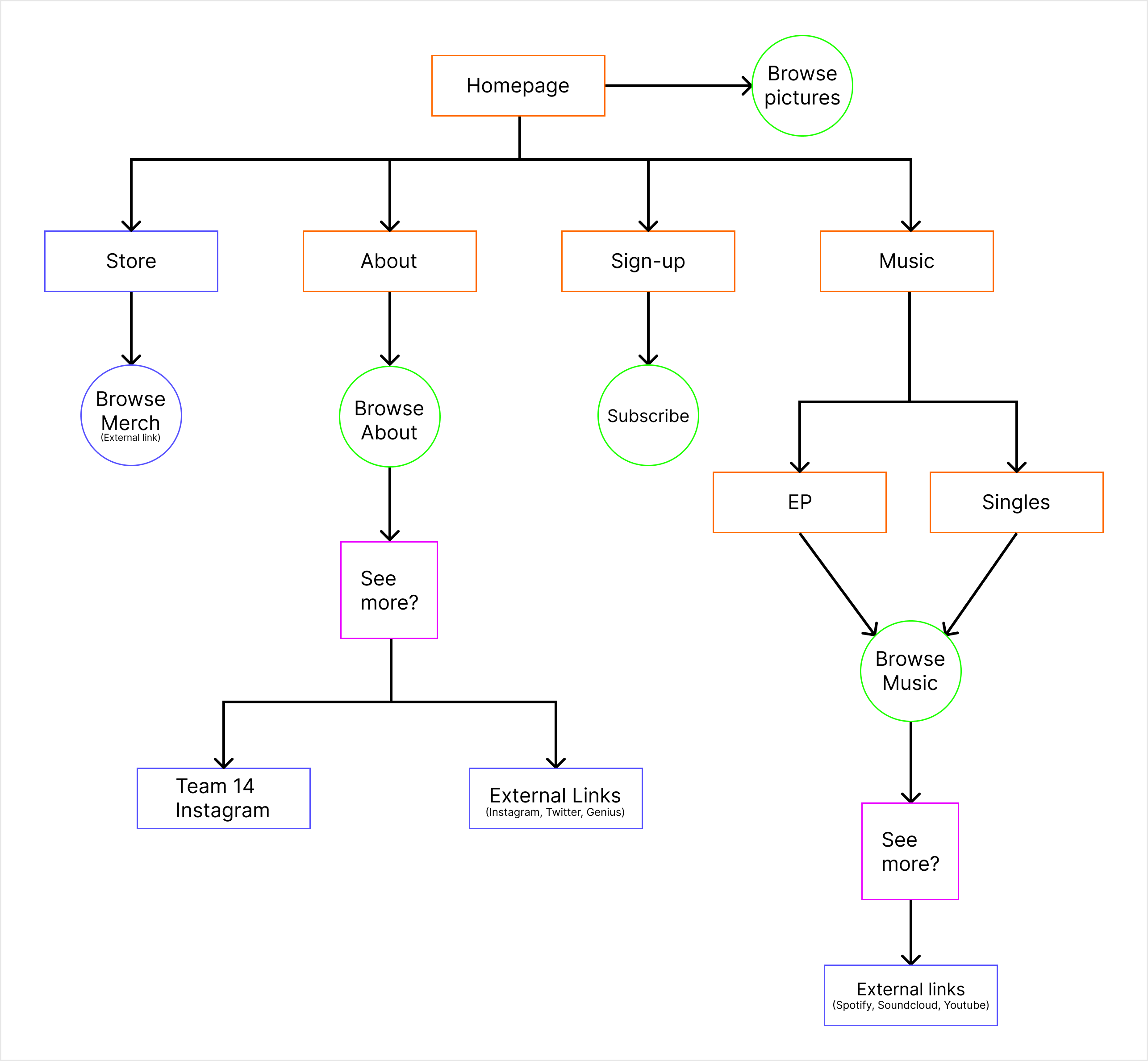
Designing the user flow began with mapping key user goals: discovering music, learning about the artist, accessing the shop, and subscribing for updates. Because the site also needed to feel creative and interactive and not like a template, the real design challenge was keeping navigation simple while still giving the artist's personality room to come through.
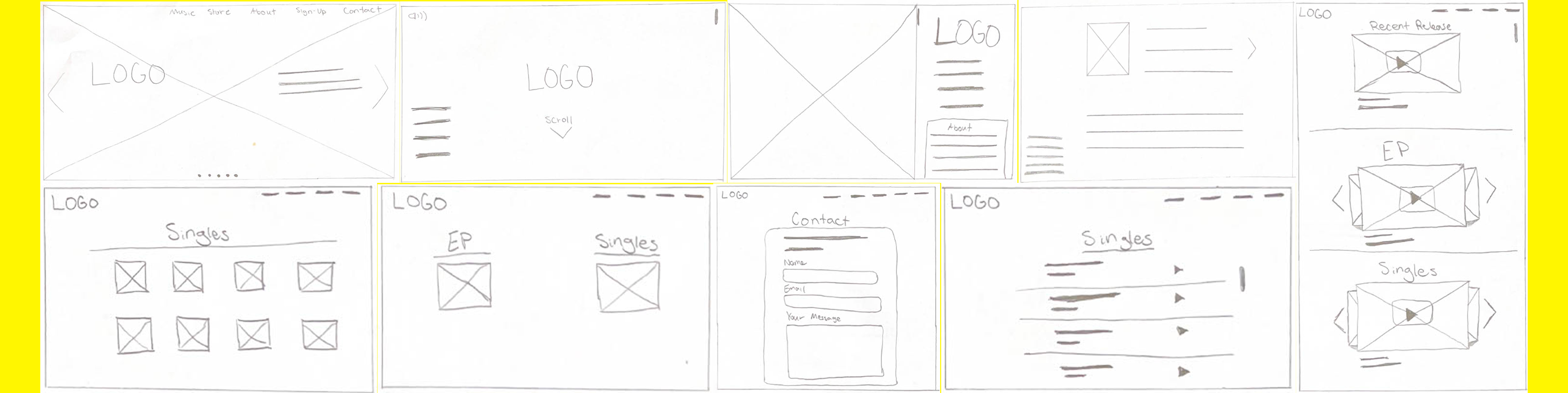
Low-fidelity wireframes were sketched, then digitized. The priority at this stage was hierarchy and scannability: making sure fans could find music and core actions fast, before any of the visual identity was layered in.
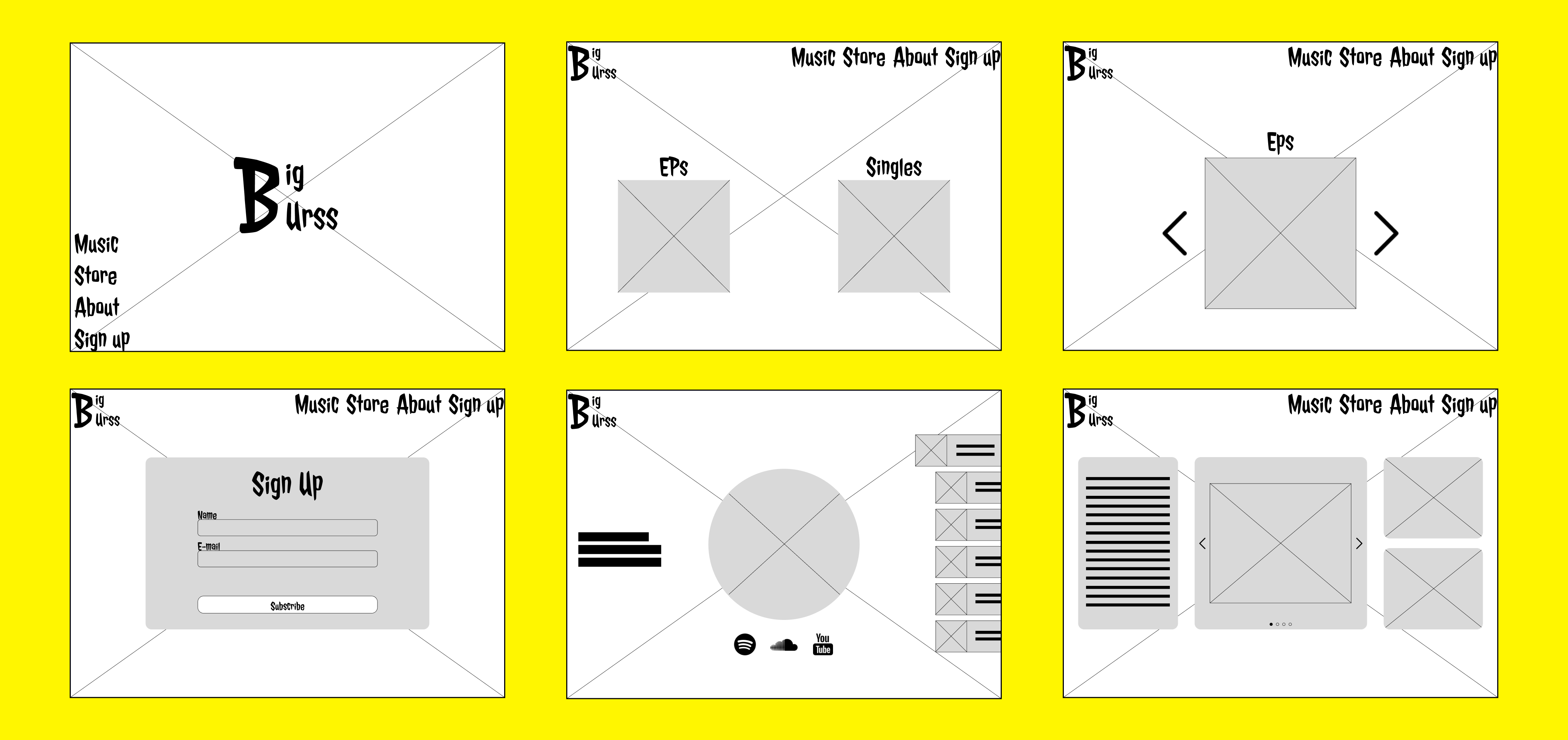
Because music and interactivity were the priority, I translated the user flow into visual layouts that kept things simple and usable rather than decorative: the goal was to keep every screen in service of the content, not competing with it.
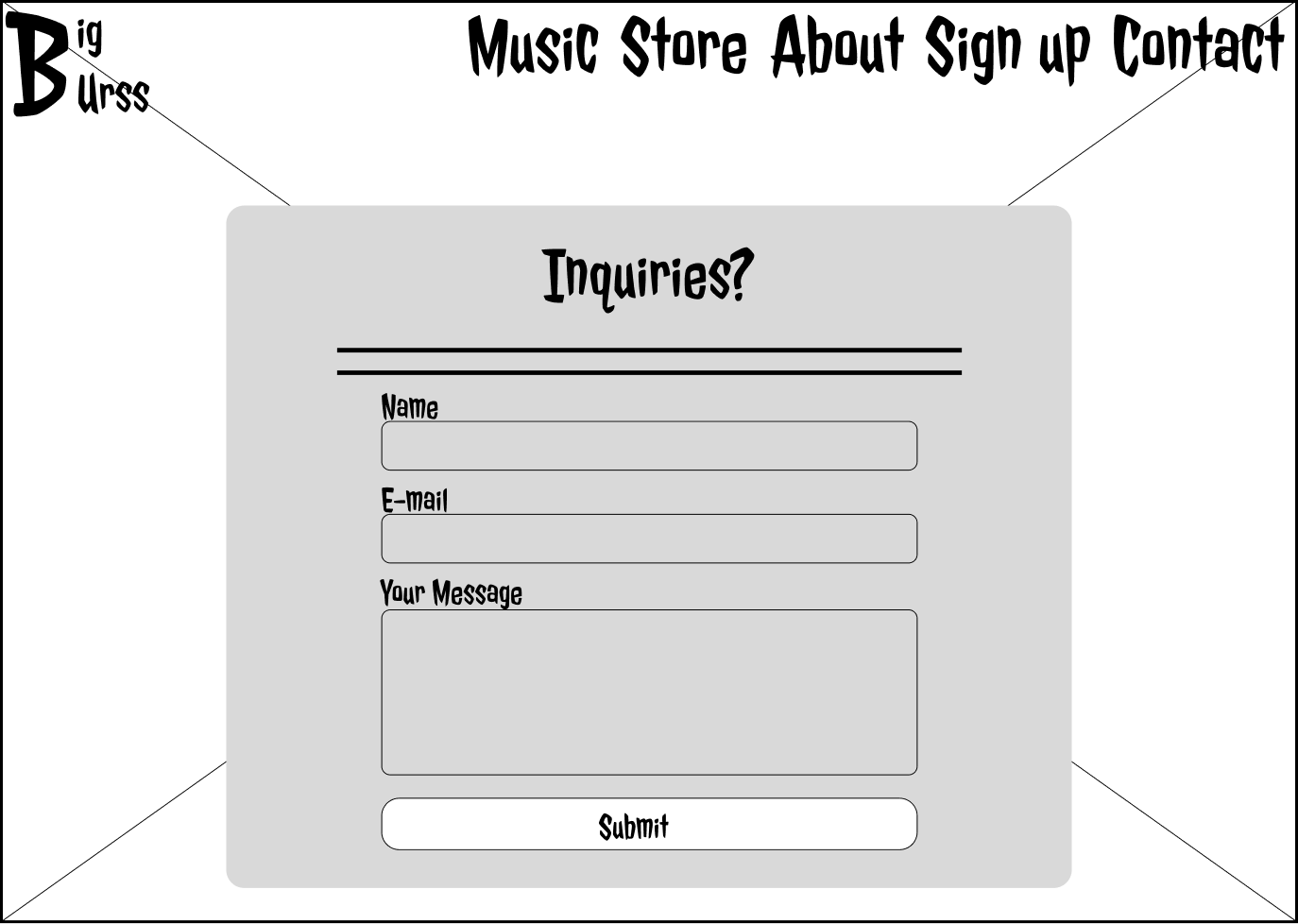
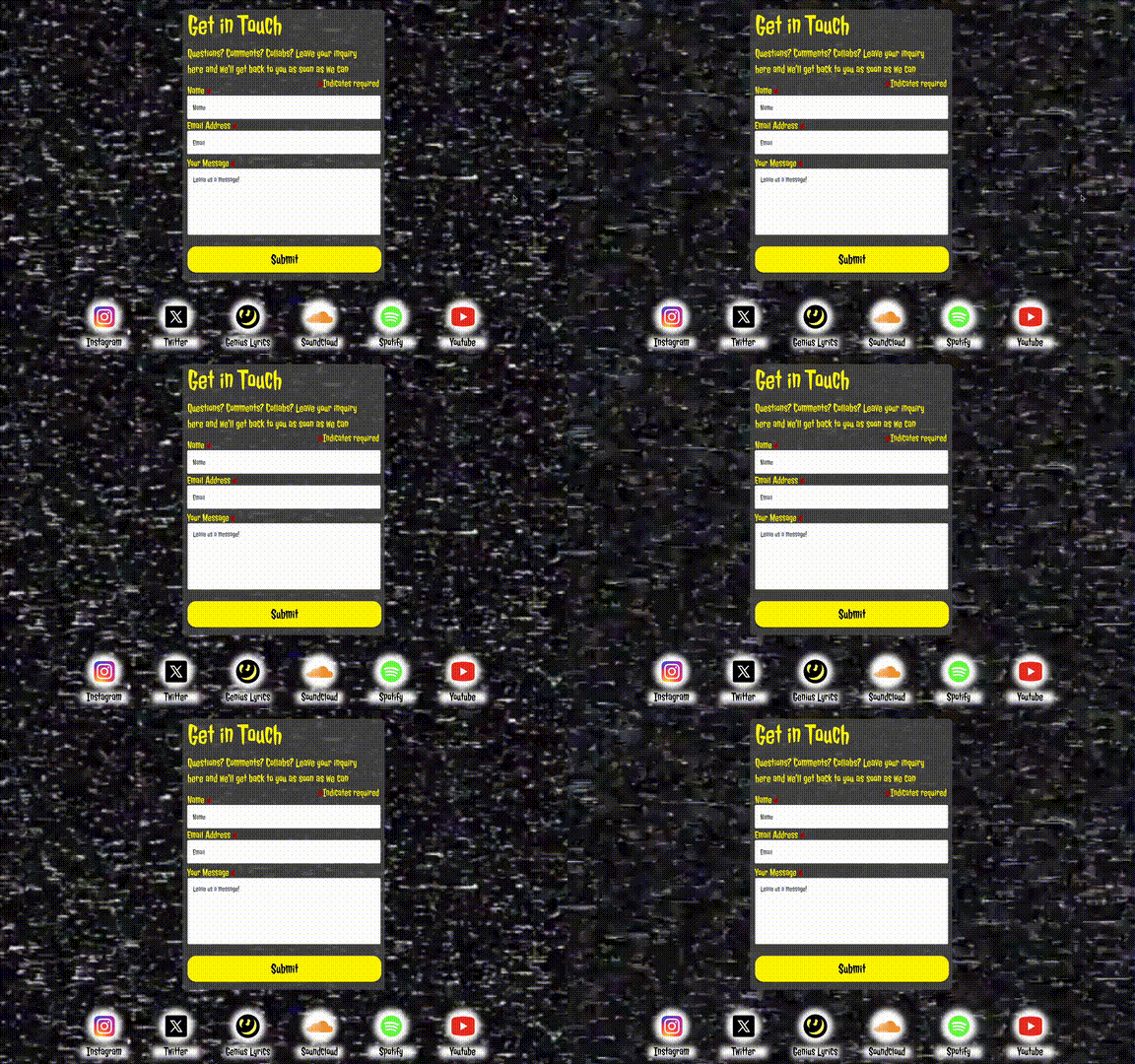
After early usability testing and interviews, I found that a contact page was a highly valued feature that hadn't been part of the original scope. I added it to the MVP: a direct example of letting research reshape the plan rather than sticking rigidly to the original feature list.
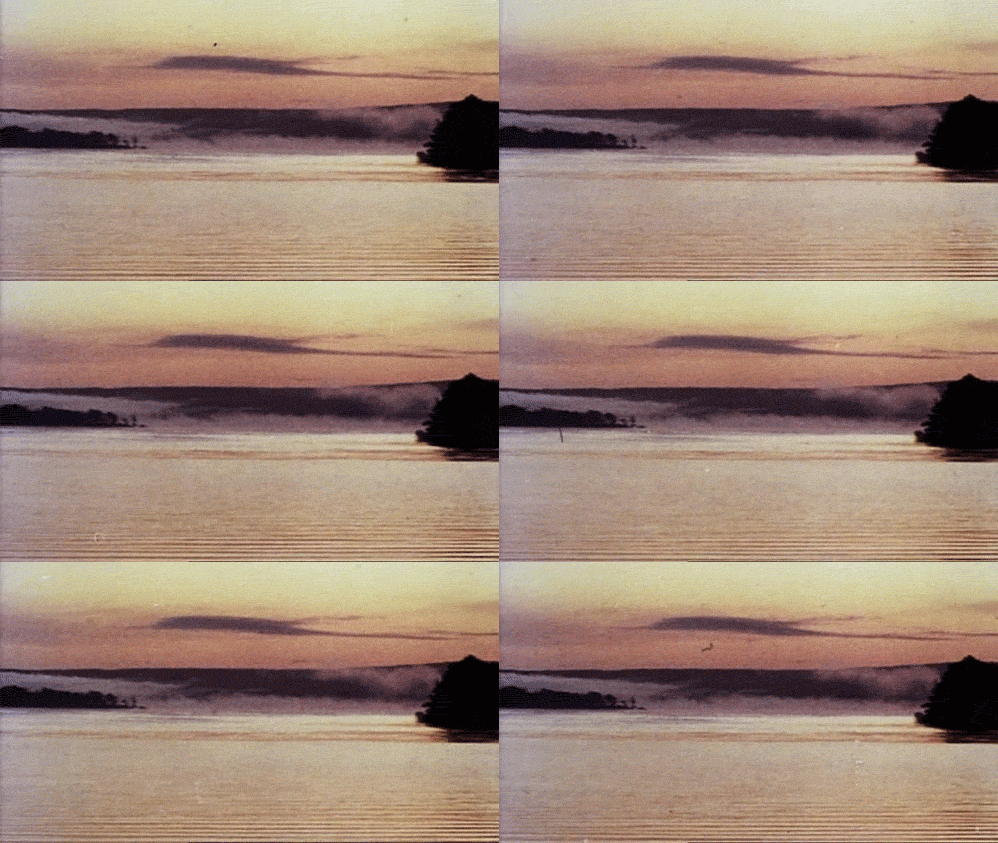
I had creative freedom over features and layout, but the artist chose the background image, so instead of designing from a blank canvas, I had to reverse-engineer a visual identity that fit an asset I didn't choose. I landed on a retro aesthetic that matched both the background and the tone of Big Burss's latest single.
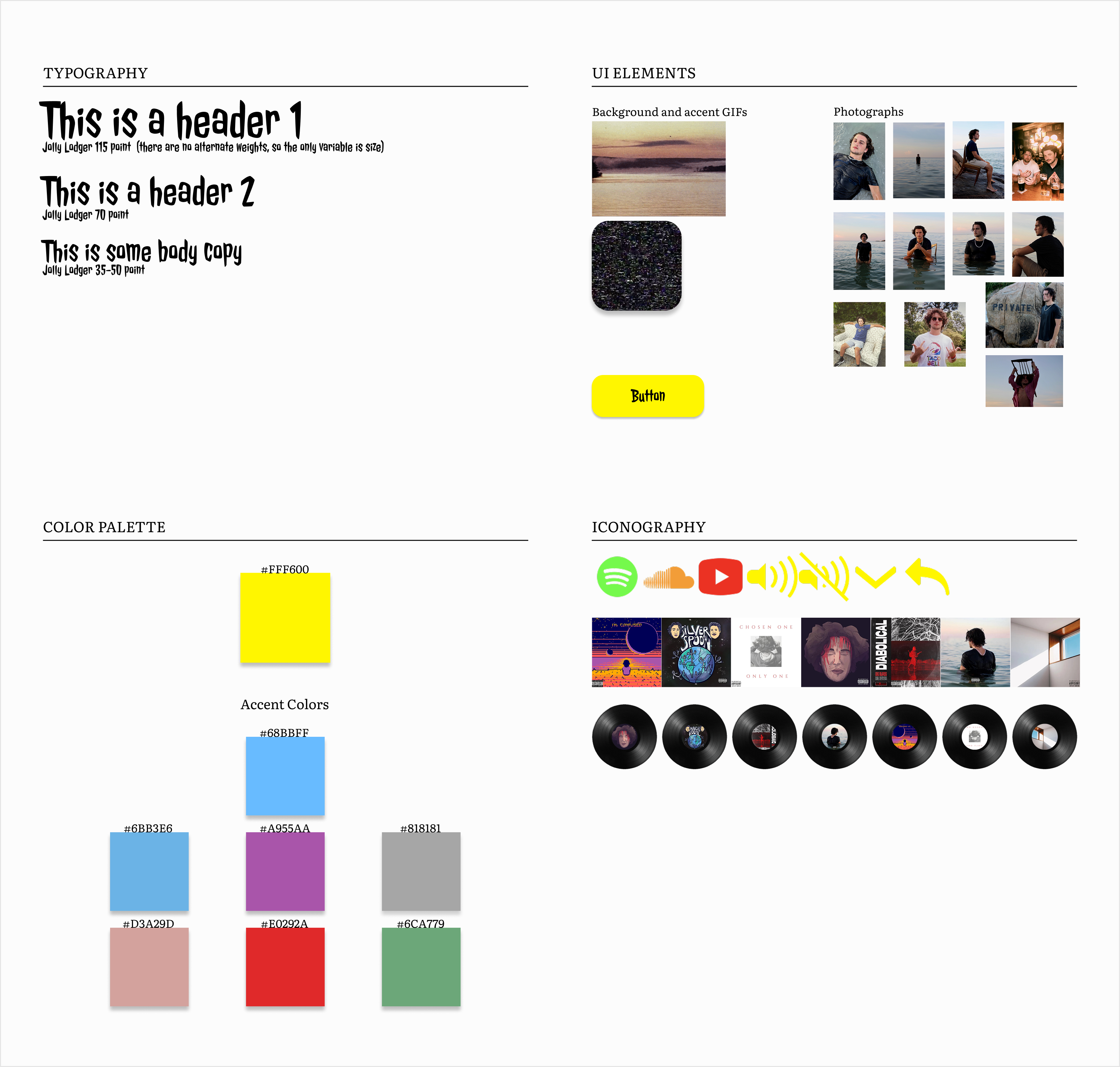
I created an easy to understand sticker sheet for individuals to use as a reference for the site’s UI elements
This site was designed to be goal-oriented: visuals mattered, but getting fans engaging with Big Burss's actual music and content came before making any single page look impressive on its own. That priority shaped the page layouts: large visual areas for the artist's imagery, paired with minimalist but expressive typography that didn't compete with the content.

Some sample questions asked during user interviews:
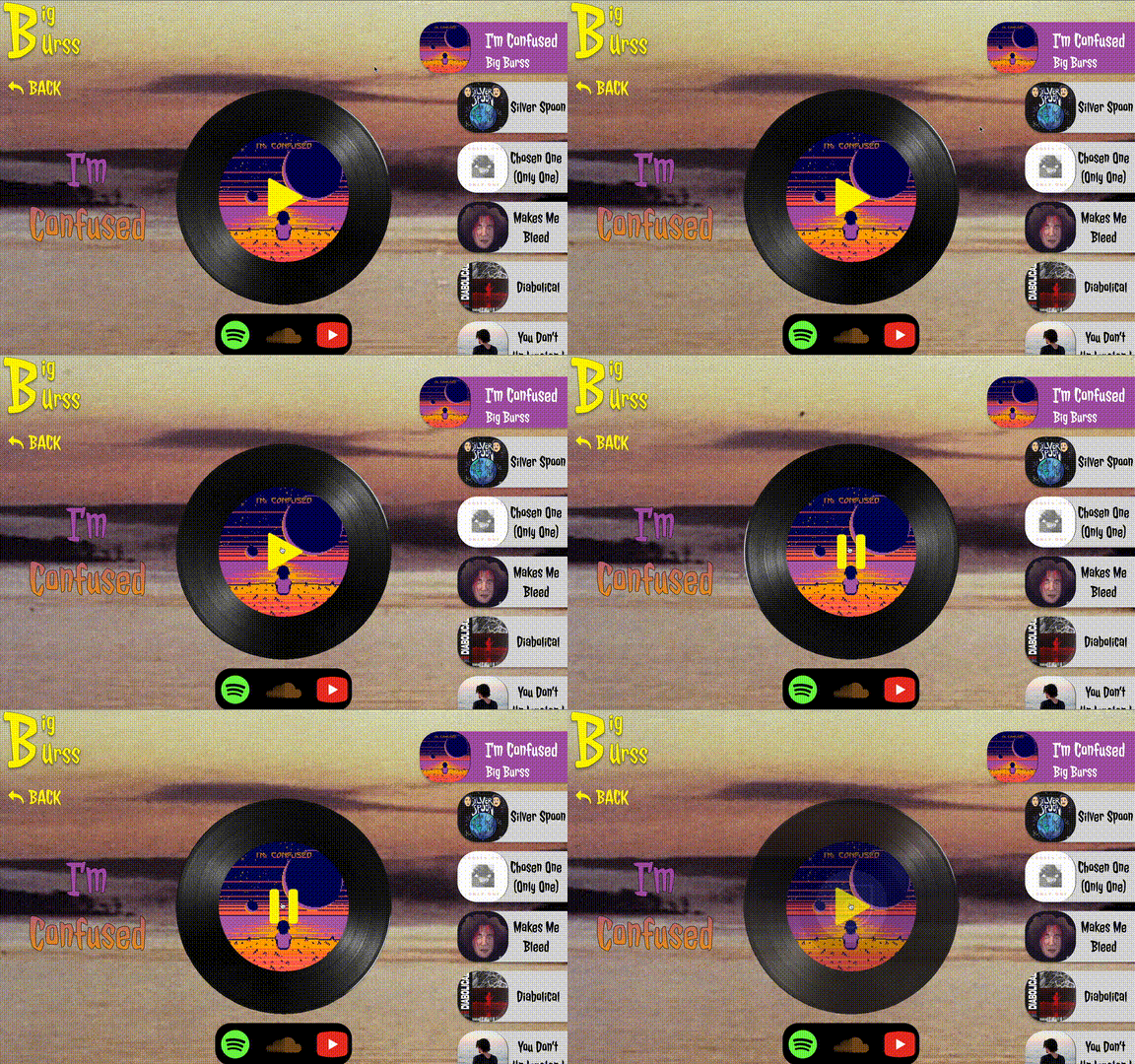

I initially planned to use autoplay, assuming it would help users with accessibility needs. Testing proved that assumption wrong: the most common complaint from users was that they didn't want autoplay at all while exploring music.
Having fallen victim to the struggles of Netflix’s scroll-over autoplay feature myself, it was not a difficult choice to make, and this was iterated upon the final prototype through a play/pause button on the music exploration pages, as well as a sound toggle button on the homepage.
I went on to develop the site using CSS and HTML, and published it through a domain on GoDaddy.
Two weeks post-launch, we observed a slight rise in visits to Big Burss's streaming links.
I want to be upfront about the limits of that number: with a small, localized user base and no advertising, I can't confidently attribute the increase to new fan discovery versus existing fans checking out the redesign.
Based on user test feedback, users found the site to be engaging and easy to navigate.
The contact form was one of the most used features on the site (other than the music discovery page)
Designing for authenticity requires balance:
Translating an artist's personality into a digital experience taught me to balance creative expression with usability. The real lesson: a site can look distinctive and still fail if that distinctiveness comes at the cost of accessibility or basic legibility, the two have to hold together, not trade off.
The importance and difficulties of collaboration:
The artist only gave direct creative input on the background image, but working with him at all, a real stakeholder, not a hypothetical persona, underscored how much open communication about goals and tone matters when the deliverable has to feel true to someone else's identity, not just usable for a generic user.