_LOGO.png)
.png)

Fashion enthusiasts seeking premium, trend-driven clothing often face fragmented online shopping experiences, where brand storytelling, product discovery, and luxury aesthetics feel disconnected. How can I design a digital platform that elevates the shopping journey into a cohesive, editorial-inspired luxury experience, allowing users to seamlessly explore, be inspired, and shop across diverse fashion categories?
In order to guide OBLX’s design decisions, user interviews were conducted with 7 users - 4 men and 3 women ranging from 18-37 years old, in order to understand user needs and frustrations with currently existing fashion and clothing websites.
As the first drop from OBLX was a unisex basics line, there was no firm intended demographic in terms of age. However, it was noted that the most frequent online shoppers tend to be in the 18-34 age bracket.

Age: 27
Location: New York, NY
Occupation: Creative Director

Age: 30
Location: Chicago, IL
Occupation: Tech Consultant

Age: 34
Location: Seattle, WA
Occupation: Business Analyst

I also conducted a competitive analysis, in which I gathered information about how a luxury clothing brand’s site should look and feel.
.jpg)



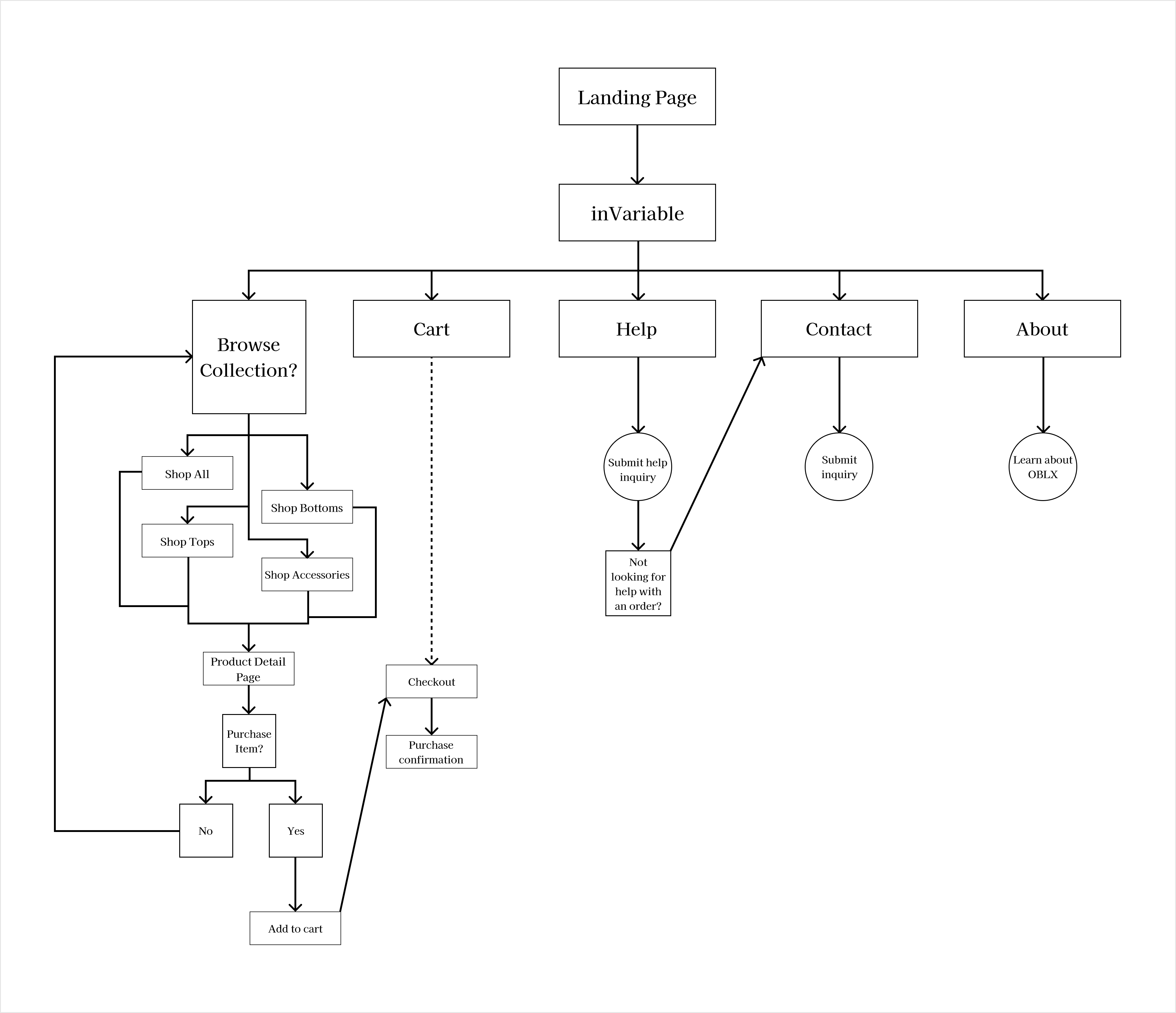
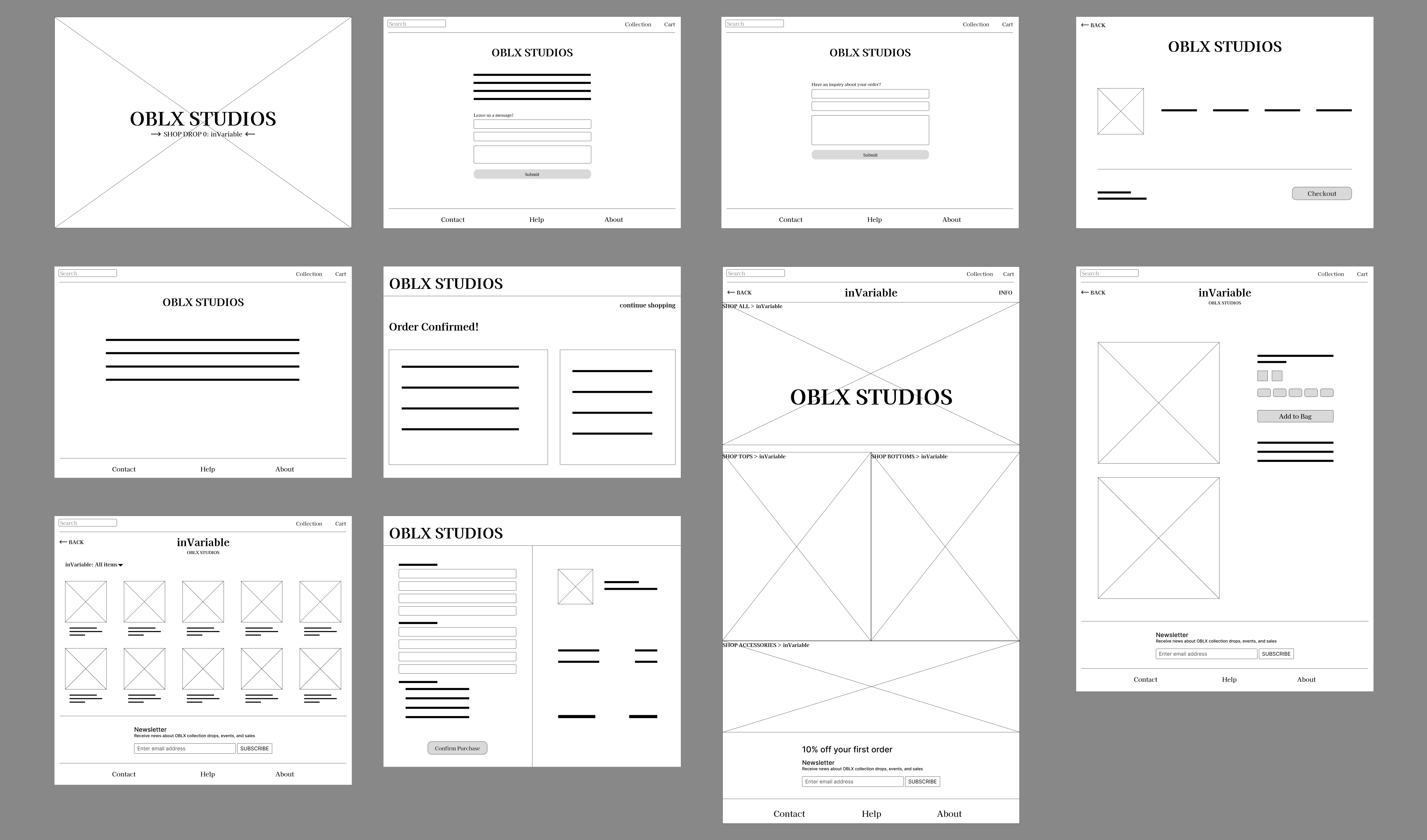
In order to ensure a seamless shopping experience for OBLX, I began by mapping user flows based on key tasks. Insights from user interviews and personas informed the priorities for navigation and content hierarchy. Because OBLX is a higher end brand, I opted for as minimalistic of an approach as I could take without sacrificing essential features.
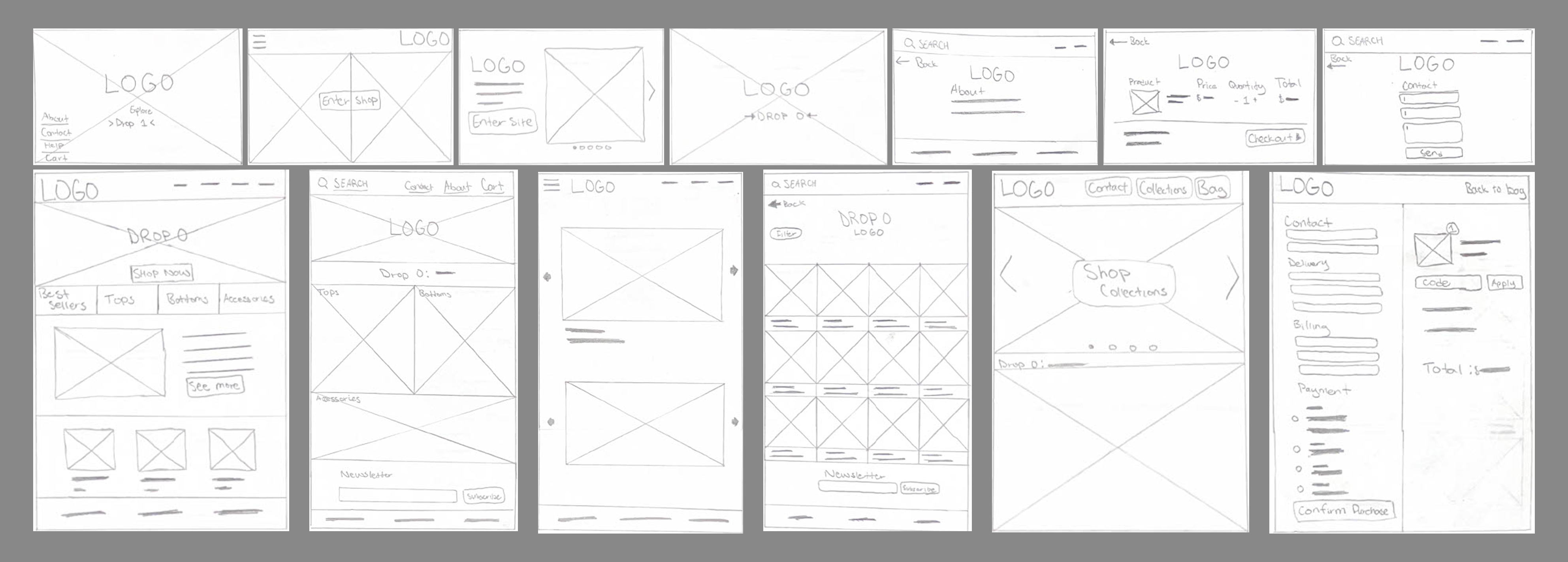
My goal for wireframing was to translate earlier insights from the user research and competitive analysis into tangible layouts, with the main takeaway being the need to design the site in a way that balanced luxury aesthetics with usability in order to ensure that essential actions such as browsing collections, completing purchases, and getting in contact with the brand are intuitive and seamless for users.
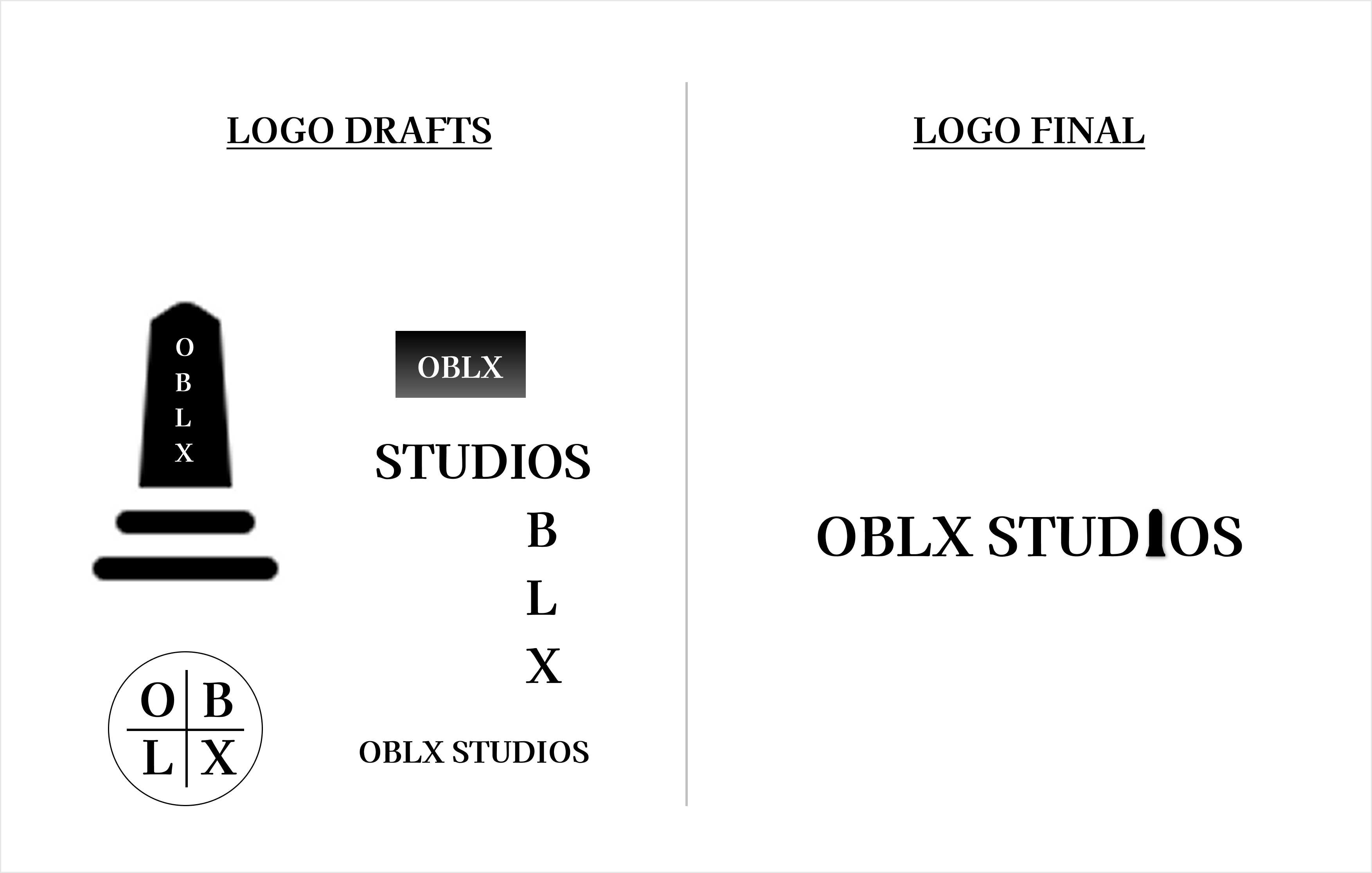
The name “OBLX Studios” (Obelisk Studios) is representative of the symbol that the name is derived from. In crafting the branding of the website, my primary focus was to translate the brand’s core values of luxury, timelessness, and inclusivity into a cohesive digital identity.
The logo design was inspired by the brand's name, featuring an extra-bold font with a small obelisk substituting the 'I' in 'studios,' resulting in a logo that is straightforward yet distinctive.
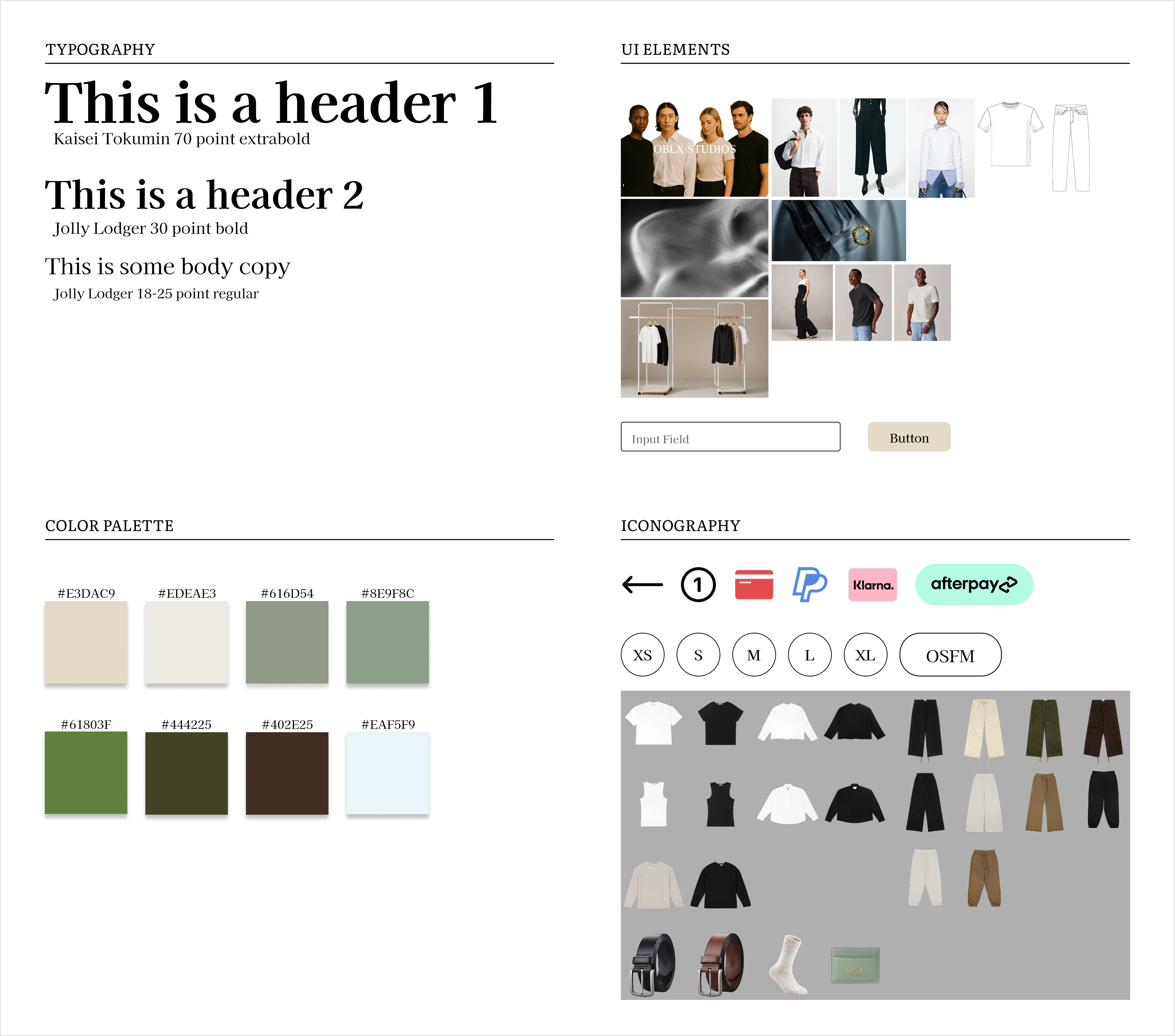
I created an easy to understand sticker sheet for individuals to use as a reference for the site’s UI elements
Since this was not a real world project and I lacked a collection of product and model images, I utilized a combination of images from Entire Studios (entirestudios.com), stock images, and some that I created myself for the site's visuals.

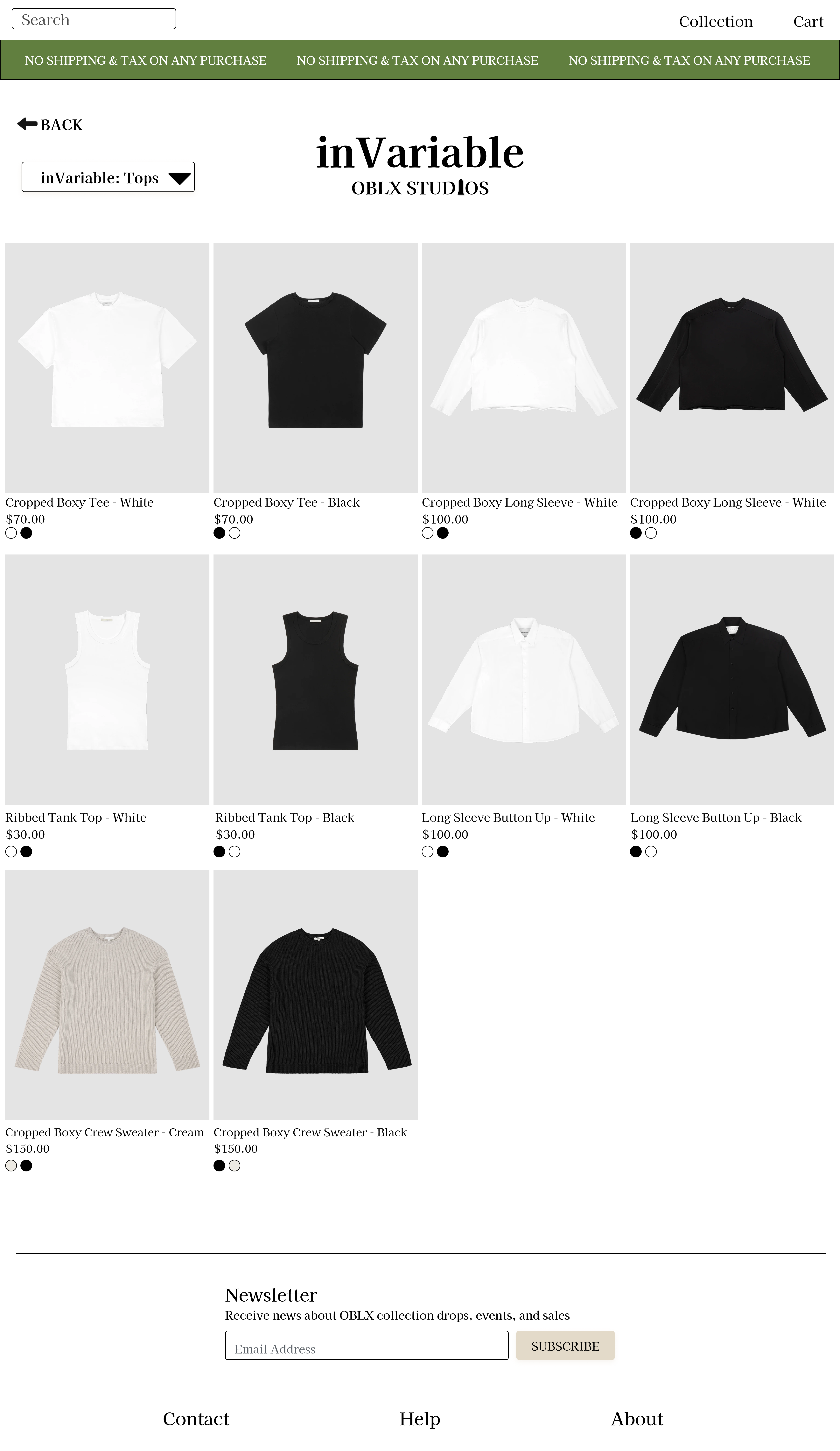
The initial concept for the high-fidelity prototype was to design the product browsing pages to resemble a magazine layout.
However, after further testing with users, the design was refined to feature a more visually appealing and user-friendly interface. The use of white space was kept consistent to enhance the perception of quality and luxury, and contrast ratios were improved for better readability.
Some sample questions asked during user interviews:

Although this was not a real world project, understanding whether or not this MVP is successful or not will mainly have to do with KPIs such as:
Takeaways:
One of the biggest takeaways from this project was that a premium aesthetic must coexist with functional clarity. Overly minimal or “artsy” design choices can alienate users if they obscure navigation or product discovery. I had to learn to strike a careful balance between editorial beauty and practical usability.
What I'd do differently next time:
While my low-fidelity prototypes gave valuable insights, some navigation pain points surfaced later in the process. Testing wireframes earlier on could have saved design revisions and development time.