_LOGO.png)

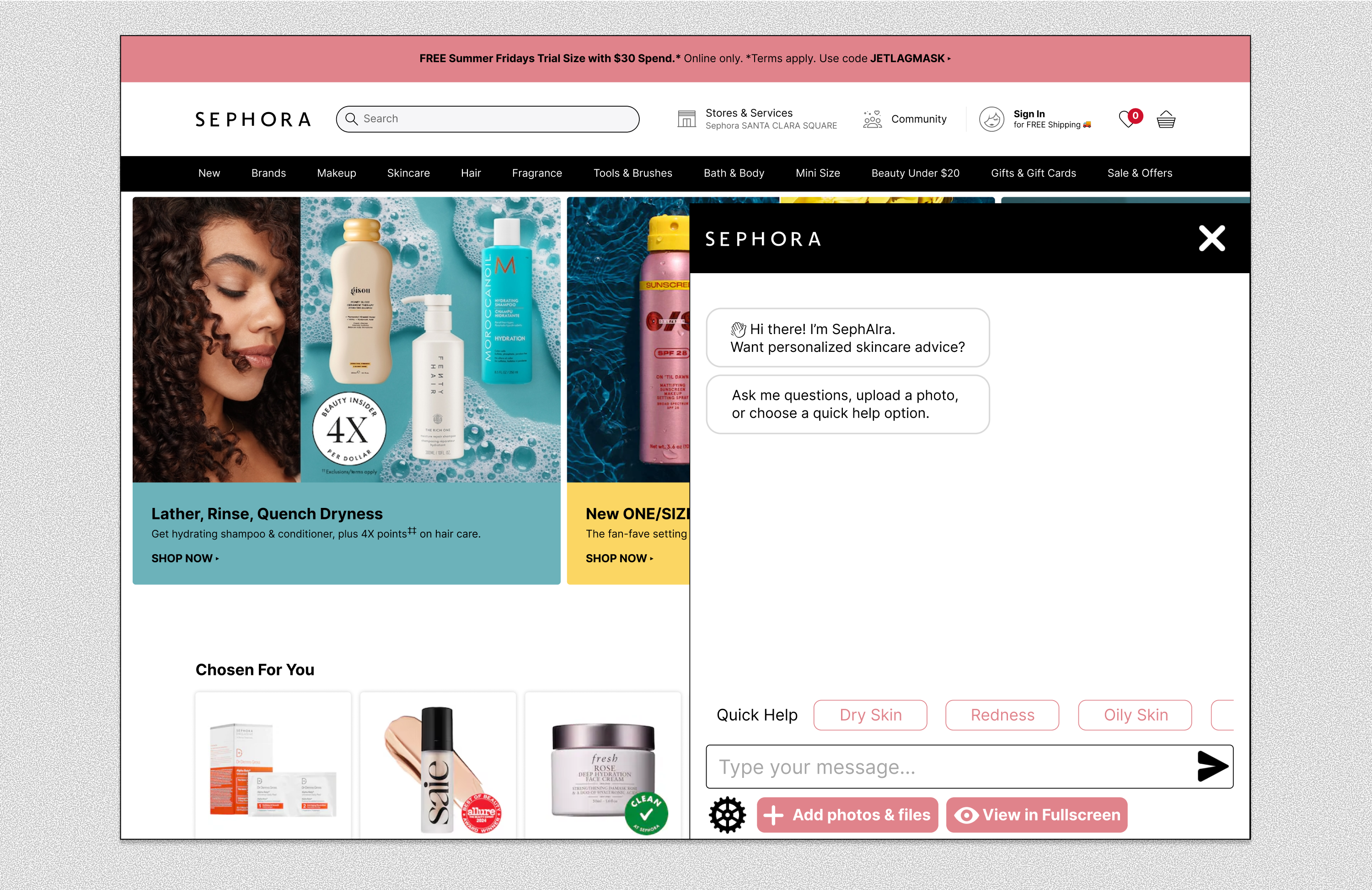
An AI-powered skincare assistant embedded into Sephora.com, delivering personalized recommendations through a conversational interface. The goal wasn't to add another AI feature, rather, it was to make an overwhelming catalog feel navigable for shoppers who don't know where to start.

Caleb wants advice without visiting a store; Elias doesn't understand skincare terminology and worries about wasting money on products that won't work. Across 6 interviews with skincare-beginner men (21-30), the same pattern emerged: users didn't lack access to product information, rather, they lacked confidence that any of it applied to them specifically. With 8,000+ SKUs on Sephora.com, that gap turns into decision fatigue and cart abandonment.
In order to understand user needs and frustrations, I conducted 6 user interviews, all skincare beginners, with men ranging from 21-30 years old.

Age: 27
Location: San Francisco, CA
Occupation: Project Manager
Marco has been using skincare products for years, especially for sun protection due to living in Florida. He’s interested in maintaining healthy, youthful-looking skin and is willing to spend on top-tier products. However, he’s always looking for new ways to optimize his routine.

Age: 25
Location: Saint Louis, MO
Occupation: Software Engineer
Caleb takes pride in his appearance but has mostly focused on hair and grooming. Recently, he’s been noticing early signs of aging and dryness. He’s open to expanding his skincare regimen but doesn’t want a long or overly complex routine.
.png)
Age: 24
Location: Nashville, TN
Occupation: Graphic Designer
Elias recently graduated from college and started his first job. He’s never had a skincare routine beyond washing his face in the shower. After a few breakouts and noticing his skin looking dull, he’s decided to take skincare more seriously, but he’s intimidated by Sephora’s large catalog.
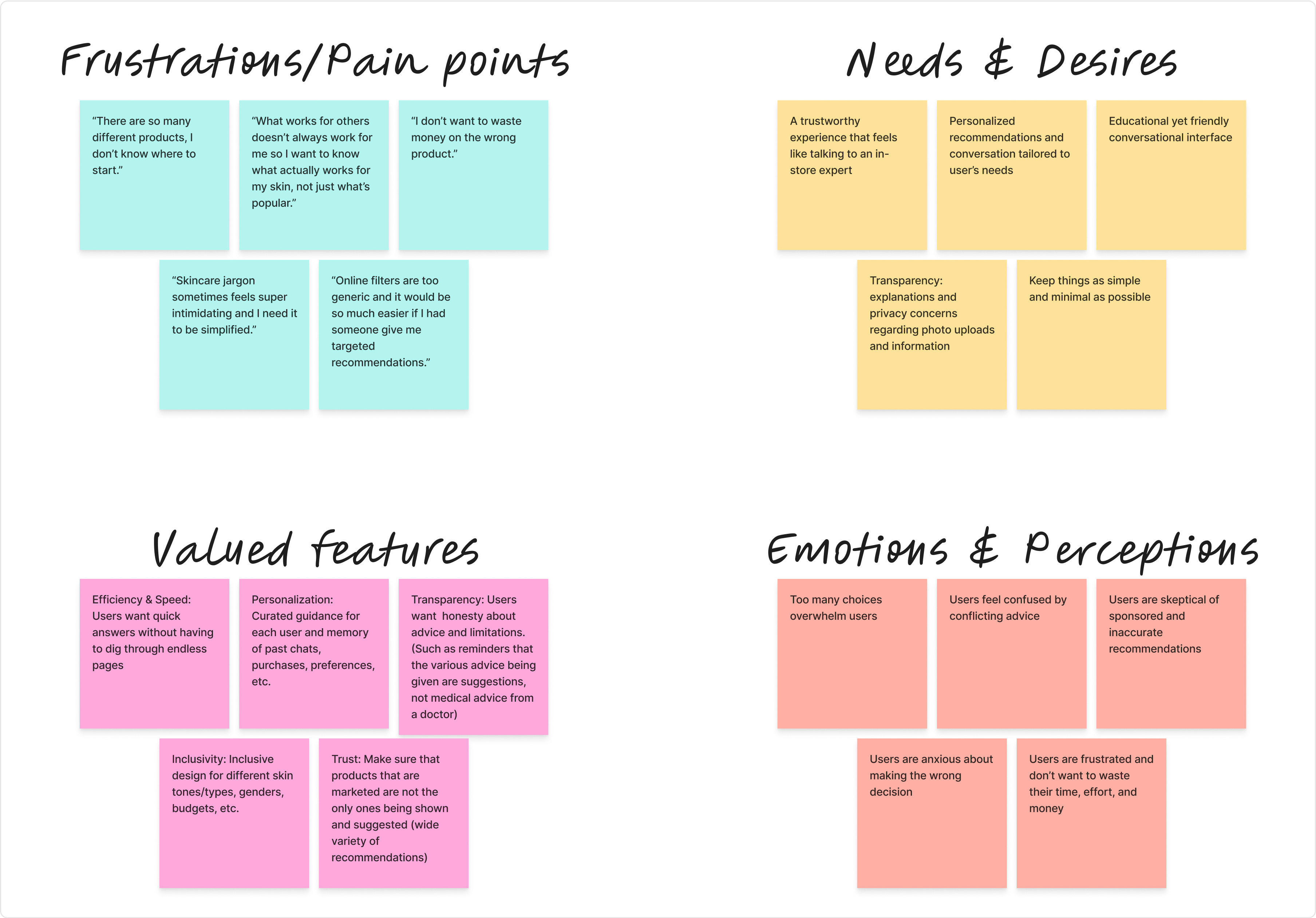
Sephora customers want the reassurance of in-store expertise translated into a fast, personalized, and trustworthy digital experience. Users are likely to adopt SephAIra if it reduces overwhelm, builds trust, and respects their privacy while delivering genuinely useful recommendations.

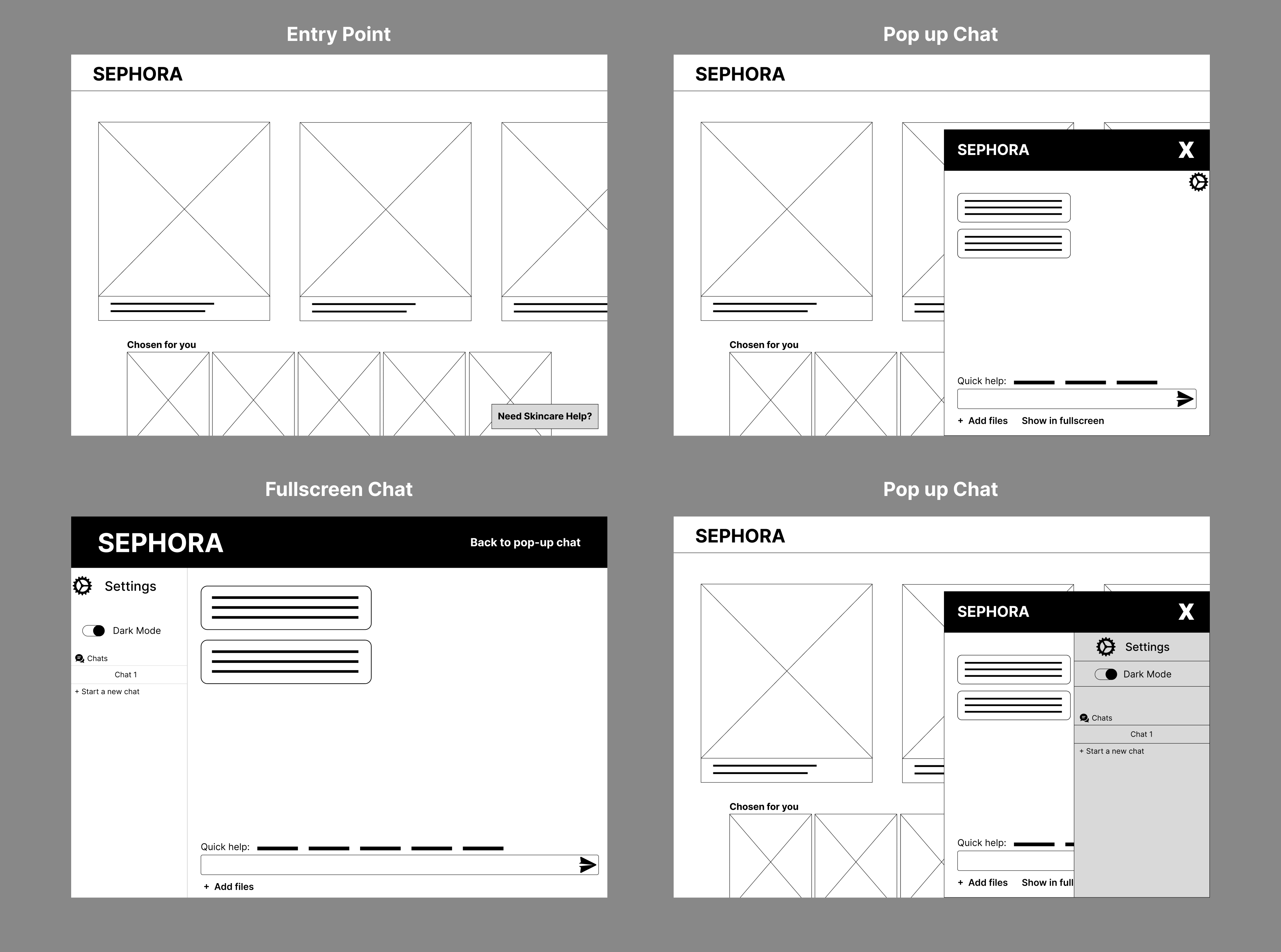
Preliminary research revealed a split: some users wanted a lightweight pop-up for quick Q&A, others wanted a full-page experience for photo analysis and routine building. Rather than picking one at the expense of the other, I built a hybrid that lets users toggle between both, so the interface adapts to intent instead of forcing a single interaction model on everyone.
I began with low-fidelity wireframes focused on structure and functionality over visuals. The priority was mapping how a user moves between the pop-up and fullscreen states without losing their place in the conversation. The hybrid model only works if that transition feels seamless.
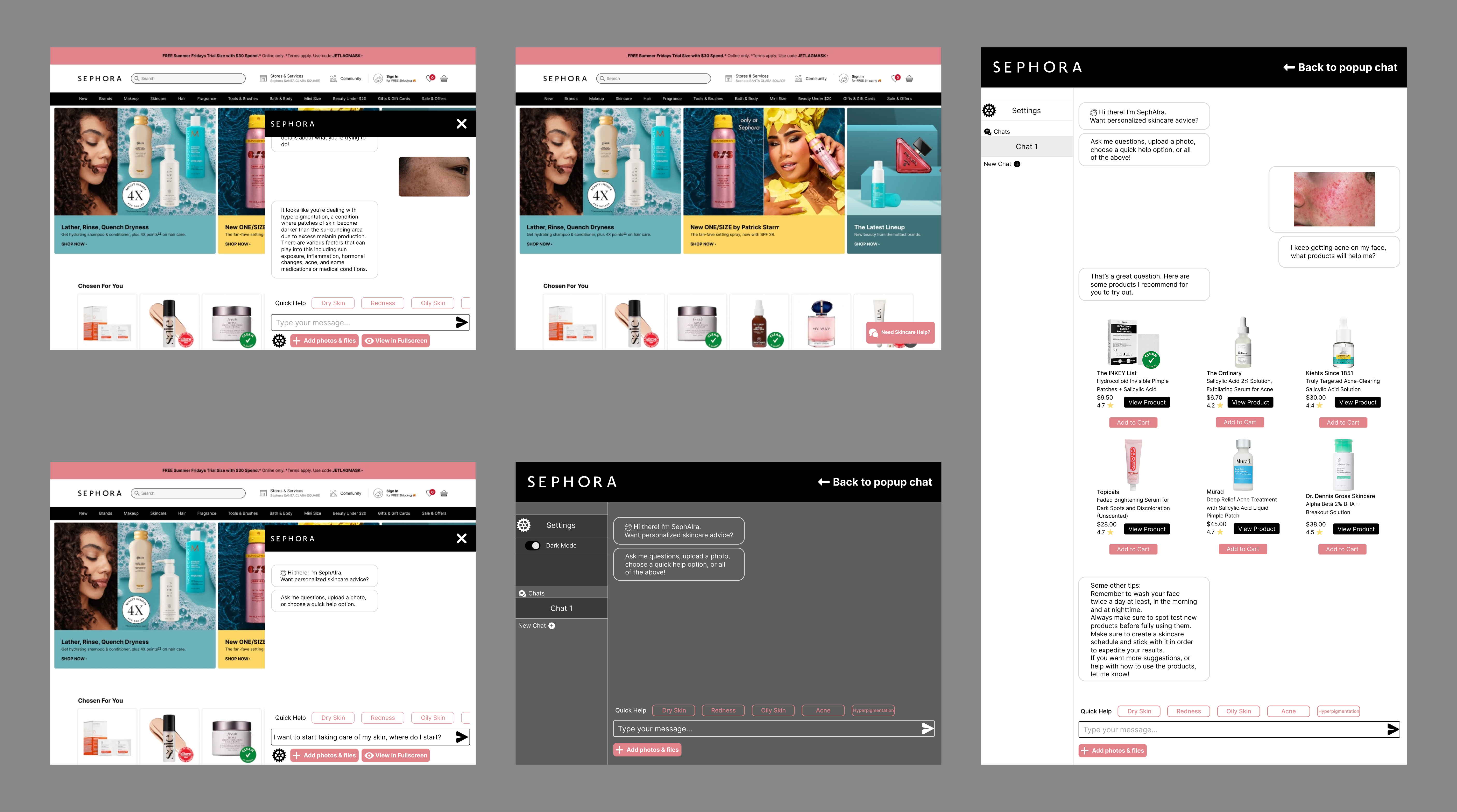
Since building a real AI backend was out of scope for an independent project, I used GPT-4 as a stand-in; prompting it to act as "an AI chatbot on Sephora.com, helping users discover which products to use for specific scenarios and providing them with product links." This let participants have a live, real-time conversation with a working version of SephAIra, so I could test actual conversational flow and decision-making instead of just walking through static mockups.
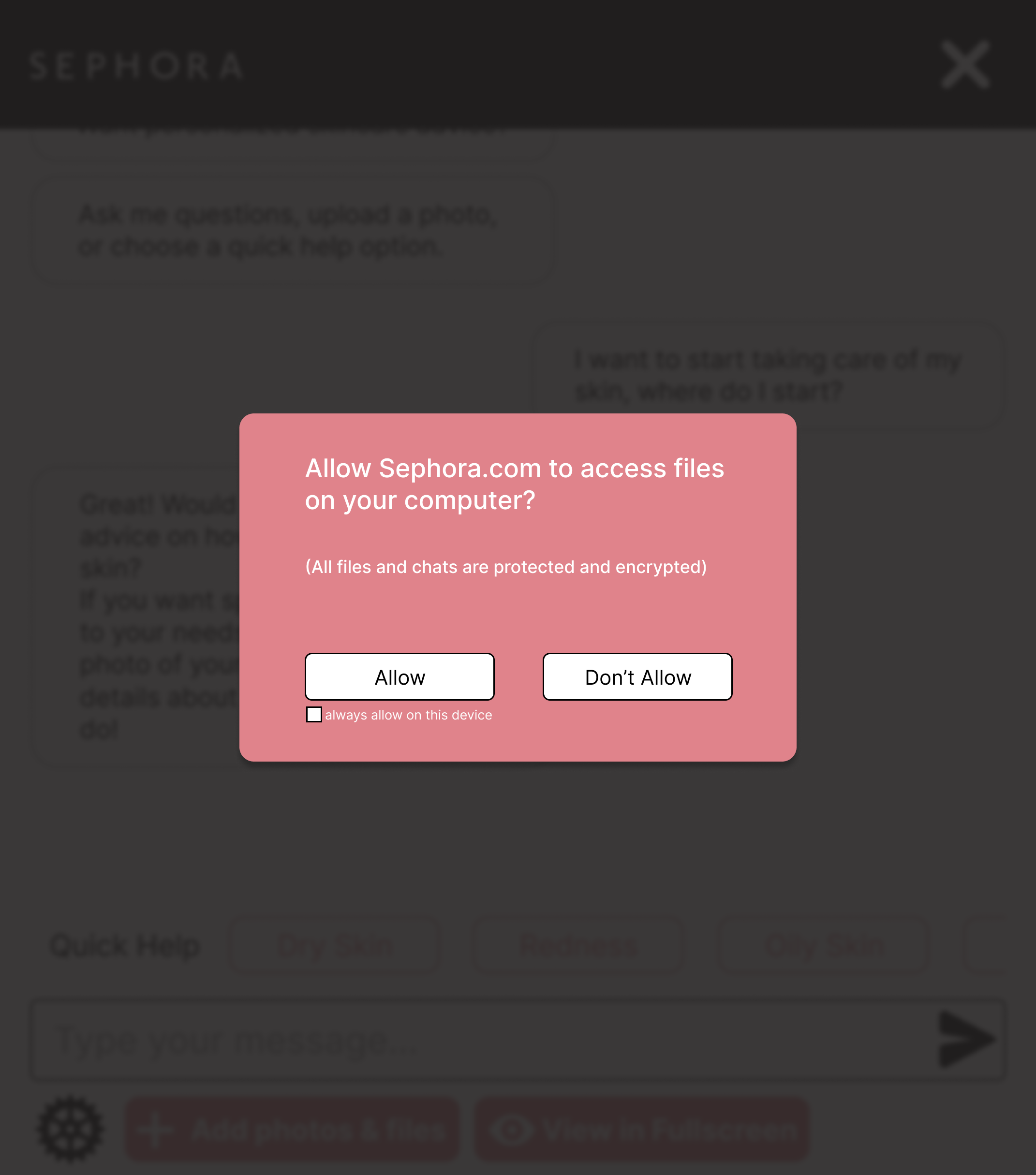
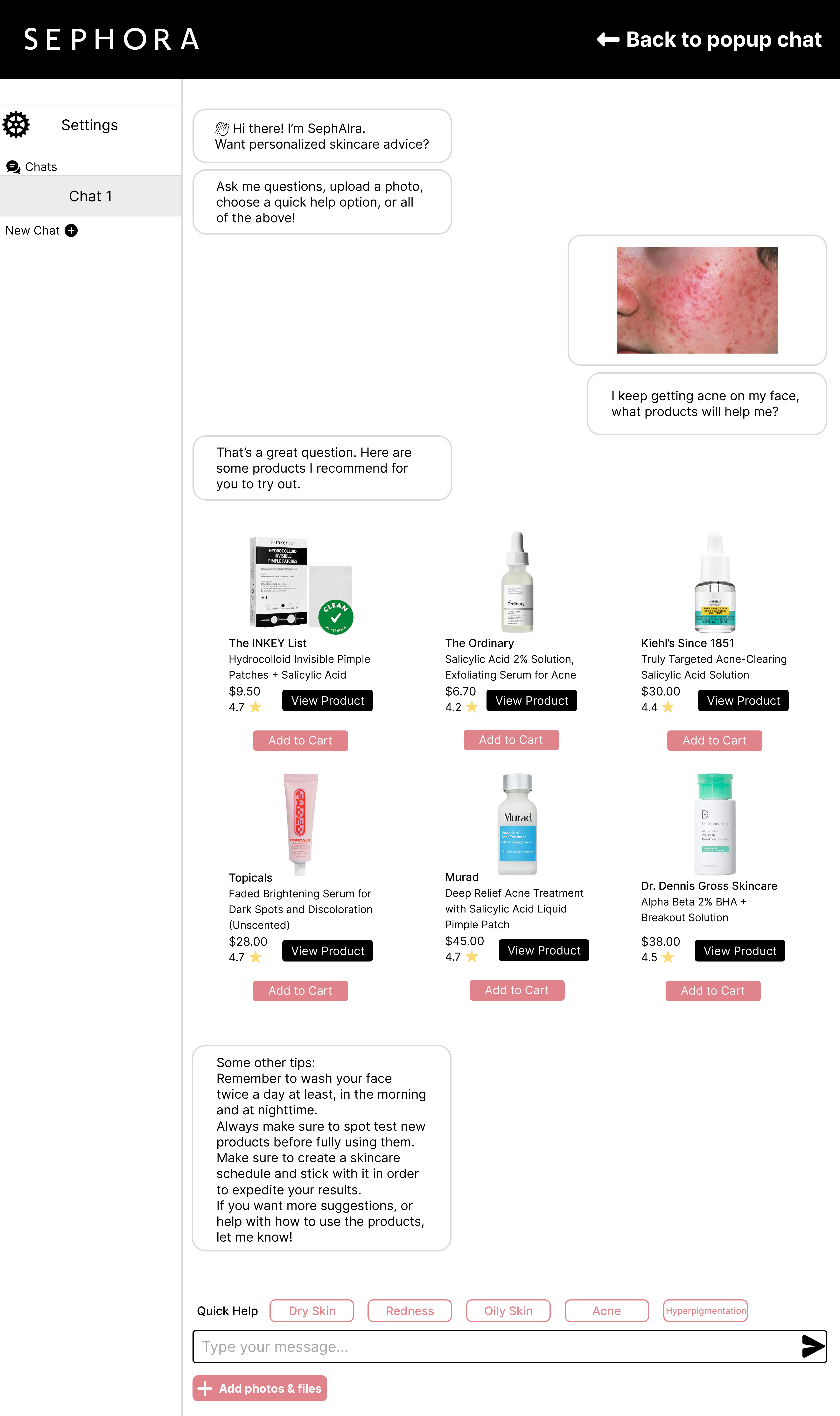

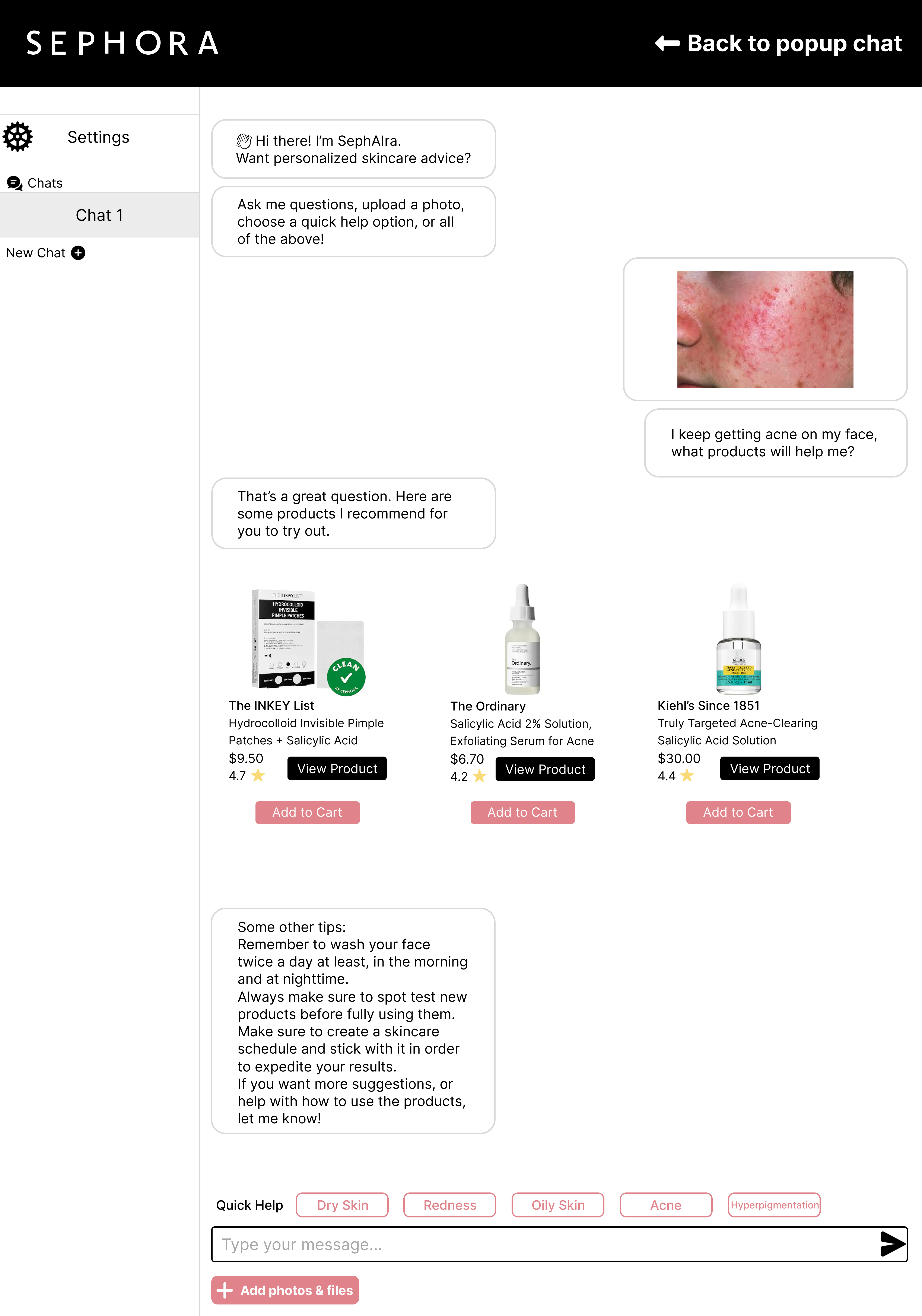
Following launch, success would be measured through three KPIs: conversion rate, user confidence during product selection, and reduced decision fatigue for new shoppers: the three outcomes the original research identified as the actual problem, not just usage volume.
Given the success of the MVP:
The "AI" isnt the experience, trust and context are:
The novelty of AI fades fast if it doesn't feel reliable or contextual. The further I got in this project, the more I realized that the success of a project such as SephAIra would depend less on what the AI could do, and more on how it explained itself. The framing of AI as an assistant, rather than an authority, would keep users more comfortable and engaged.
Designing for uncertainty is just as important, at times if not more, as designing for clarity:
Through researching and testing, I realized users didn't just need answers to their questions, they needed reassurance when they weren't sure what to even ask. This project taught me to design for hesitation by creating pathways for users who are unsure, curious, or even skeptical through things such as a friendly tone or a well placed prompt.